
The Strait of Hormuz: Why it's so important for global logistics

The Strait of Hormuz is one of the key transport corridors of the global economy. It handles approximately 20-25% of global maritime oil trade and a significant share of gas and petrochemical shipments, so any traffic restrictions in this region immediately impact shipping costs, delivery times, and global supply chains.
For international logistics companies, including Inter-Freight, the situation around the strait is of strategic importance, as it impacts maritime shipping routes, freight costs, and the stability of international trade.
What is the Strait of Hormuz and where is it located?
The Strait of Hormuz is a narrow maritime corridor between Iran and Oman, connecting the Persian Gulf with the Indian Ocean.
Despite its relatively narrow width, this passage is considered one of the most important chokepoints in the global shipping industry. global trade.
Key characteristics of the strait:
- The width at the narrowest point is approximately 54 km;
- The shipping corridors are approximately 3-4 km in each direction;
- Hundreds of ships pass through it daily.
The resources of the Persian Gulf countries, one of the largest energy regions in the world, are exported through this corridor.
Why the Strait of Hormuz is critical for global logistics
A huge volume of energy resources passes through the strait. The main reason for the strait's strategic importance is Volumes of resources transported through it.
According to international energy organizations:
- About 20 million barrels of oil per day passes through the strait;
- This is approximately a quarter of all seaborne oil trade;
- Almost 20% of the global LNG market depends on this route.
The main exporting countries using this route are:
- Saudi Arabia;
- Iraq;
- Kuwait;
- UAE;
- Qatar;
- Iran.
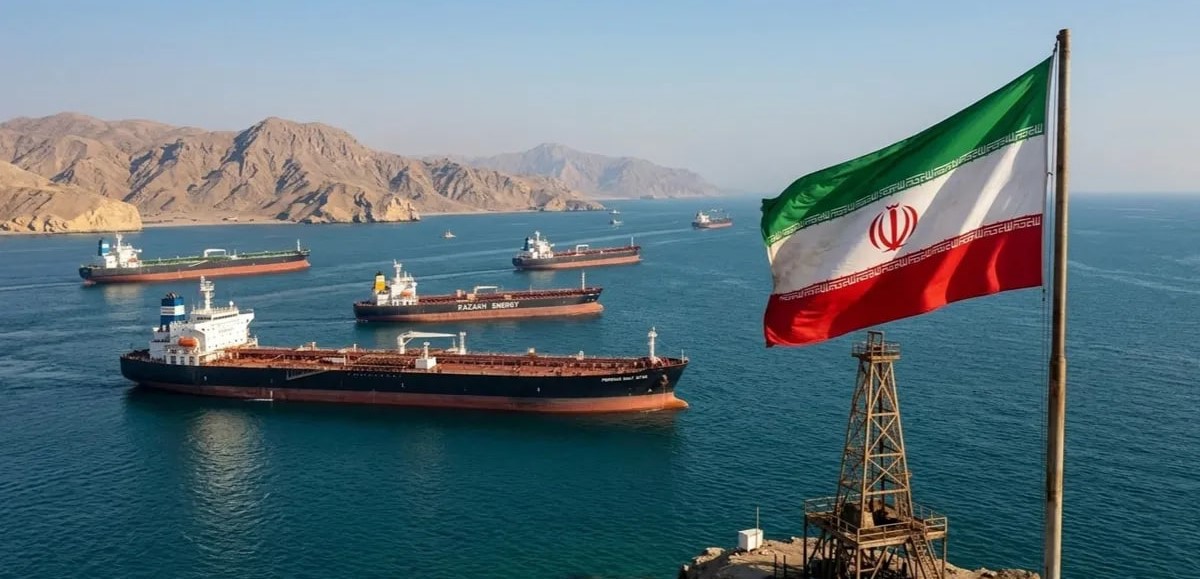
Most of these shipments are destined for Asian countries – primarily China, India, Japan, and South Korea.
The strait impacts global supply chains. Although the Strait of Hormuz is most often associated with oil, other important cargo categories also pass through it:
- petrochemicals;
- fertilizers;
- aluminum;
- industrial raw materials;
- containerized cargo.
The region is home to major logistics hubs in the Middle East, through which a significant portion of international cargo passes.
Therefore, any problems with transit through the strait could impact not only the energy sector but also global trade as a whole.
How instability in the region affects international shipping
Rising freight and insurance costs
When political or military tensions arise in the region, shipping companies are forced to consider additional risks. This leads to higher insurance rates for ships, rising shipping costs, and increased security expenses.
Even short-term traffic restrictions can significantly increase the cost of shipping cargo worldwide.
Changing Logistics Routes
If transit through a strait becomes risky, carriers seek alternative routes.
In practice, this may mean:
- bypassing sea routes;
- using other transshipment ports;
- increasing the share of multimodal transport.
However, most alternative routes are longer and more expensive, so they cannot completely replace Strait of Hormuz.
Increased delivery times
The rerouting of cargo flows and increased risks lead to vessel delays, congestion at alternative ports, and increased transit times.
For international logistics, this means additional costs and the need for more flexible supply chain planning.
Why the situation in the Strait is important for business in Belarus
Although Belarus is landlocked, events in the Strait of Hormuz indirectly affect Belarusian business.
Main reasons:
- Rising fuel costs. Disruptions in oil supplies can increase global energy prices, which affects the cost of transport and logistics.
- Increased costs of sea freight. If freight costs rise, this is reflected in the cost of shipping goods from Asia, India, and the Middle East.
- Changing global trade routes. During periods of instability, companies are forced to use more complex logistics schemes.
Therefore, when organizing international transportation, it is important to partner with experienced logistics operators who can adapt routes to unstable geopolitical conditions. Our team helps build sustainable delivery schemes and select optimal international shipping routes.
What alternatives exist in the event of problems in the Strait of Hormuz?
While it is impossible to completely replace this route, logistics companies use several solutions:
- Pipeline routes. Some Gulf countries have pipelines to ports outside the Strait.
- Alternative sea routes. Some cargo can be shipped through other ports in the Middle East.
- Multimodal logistics. A combination of sea, rail, and truck transportation helps reduce dependence on a single route.
Such solutions are actively used by international freight forwarders to ensure supply stability.
The Strait of Hormuz is a key element of the global transportation system. A significant portion of the world's energy and raw material flows passes through it, so any problems in the region quickly impact international logistics.
For companies working with international shipments, it is important to consider geopolitical risks and develop flexible delivery routes. This is why professional freight forwarding and competent supply chain management are key factors in stable international trade.
Потому что это небольшой морской проход, через который проходит огромный объем энергоресурсов и других грузов. Если движение там ограничивается, это сразу влияет на мировые рынки и логистику.
Нет. Существуют трубопроводы и обходные маршруты, но их пропускная способность значительно ниже, поэтому они не могут полностью компенсировать транзит через пролив.
Рост рисков увеличивает страховые ставки, стоимость фрахта и топливные расходы, что приводит к удорожанию международных перевозок и товаров.


Интер-фрейт от 5 февраля 2026 года

Интер-фрейт от 23 января 2026 года

Интер-фрейт от 8 января 2026 года